
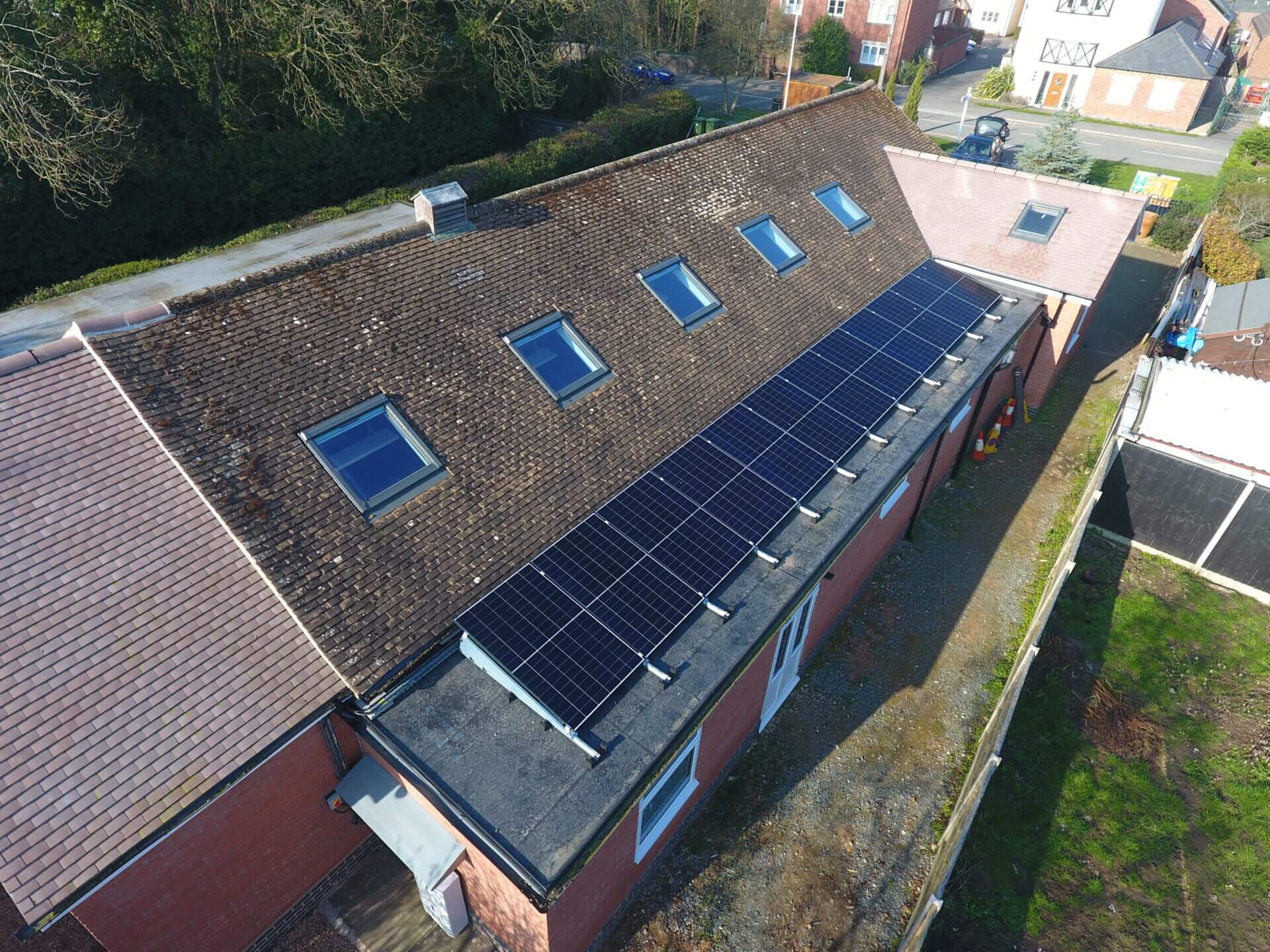
Across the UK, the move to clean energy is being shaped by whole communities working together. Not just homeowners and businesses.
Community solar projects, where local people collectively invest in and benefit from shared solar installations are emerging as a powerful model for reducing energy costs, strengthening resilience, and circulating value right where it matters most: within neighbourhoods.
In this article, we explain how community solar works, why it matters, and the investment models behind it.
Why Community Solar Matters
While rooftop solar remains an excellent option for many, it isn’t accessible to everyone. Flats, older roofs, shaded properties, or people without the capital to install a system can all be excluded under conventional approaches.
Community solar changes that. By pooling resources and sharing benefits, it allows a wider set of people and organisations to take part in the energy transition.
The benefits are clear:
- Lower energy costs – Electricity generated locally can reduce reliance on grid imports and lower bills for participants.
- Shared value – Returns or savings stay within the community rather than going to distant investors.
- Increased resilience – local generation helps communities manage rising energy prices and future‑proof against supply disruption. This is similar to the approach discussed in Solar Microgrids For Public Services.
- Stronger local identity – Renewable energy becomes a community asset, not just an individual one.
This collaborative approach reflects a growing recognition that the energy transition should be equitable, inclusive and locally anchored & outlined in the Net Zero Strategy
What Does A Neighbourhood Solar Project Look Like?
Community solar isn’t a single standard product, it’s a flexible concept that adapts to local needs, resources and goals.
Typically, schemes involve:
- A shared solar installation (on rooftops or ground‑mounted locations)
- Capital supplied by residents, businesses and organisations
- A governance structure to manage investment and distribution of benefits
Rather than each person owning a panel on their roof, participants own a share of the whole system and receive their proportionate benefit. Depending on the model chosen, these benefits may include financial returns, reduced energy bills, or reinvestment into other community priorities.

Common Investment Models
Community solar projects can take several forms, each with its own advantages
- Community Benefit Societies
Under this model, local people buy shares in a solar installation. The society is governed democratically, and surplus revenue, after providing returns to investors, is reinvested into community activities or services. This model is well suited to villages, towns or neighbourhoods with strong civic engagement.
- Cooperatives
Similar to a Community Benefit Society, a co‑operative structure gives all members a voice in decision‑making. It emphasises collective ownership and shared benefit rather than commercial profit. Cooperatives work well where mutual responsibility and democratic governance are priorities.
- Local Authority Partnerships
Some councils are collaborating with residents, landowners and installers to deliver solar on public buildings, car parks or other council‑owned sites. In these arrangements, the local authority may provide the site, community members provide capital, and specialist partners manage installation and operations. reflecting principles outlined in the UK Government’s Community Energy Strategy.
- Social Housing Solar
Community groups can work with housing associations to install solar on blocks of flats or estates. Residents, in turn, benefit through lower energy costs and improved living conditions. This model tackles both energy costs and fuel poverty, connecting technical solutions with social impact.
- Subscriber Models
Where rooftop access is limited, communities can develop larger off‑site solar arrays and allow participants to subscribe to a share of the output. Subscribers receive bill credits or payments based on the energy their share generates, broadening participation beyond those with suitable roofs.

Key Considerations For Success
Community solar projects involve careful planning and transparent governance. Some of the most important factors to consider include:
- Site suitability – assessment of roof orientation, shading, structural capacity and grid connection.
- Legal structure – clear rules for membership, profit distribution and governance.
- Financial planning – realistic modelling of generation, costs and returns.
- Maintenance and monitoring – systems last decades, so long‑term performance matters.
- Community engagement – open dialogue, clear communication and shared ownership of decisions
Done well, community solar becomes more than a technical installation, it becomes a powerful place‑based initiative that brings people together around shared goals.
Beyond Energy: Social & Environmental Value
Community solar delivers measurable carbon reductions and contributes to the UK’s net‑zero targets. But its value isn’t only environmental. By investing together, communities build social capital. They cultivate understanding of energy systems, unlock local skills, and create opportunities for reinvestment in schools, community centres, fuel‑poverty initiatives and other priorities that matter locally.
Community solar thus connects renewable energy with social progress embedding sustainability in everyday life.
Is Community Solar Right For Your Neighbourhood?
Every community is different. The right model depends on:
- Local energy demand
- Available sites and capital
- Appetite for collective investment
- Support from local authorities
A Shared Path To A Cleaner Future
Community solar is about much more than generating electricity. It’s about sharing opportunity, strengthening neighbourhood resilience and ensuring that the benefits of the clean energy transition are accessible to all.
When communities invest together, they build a future that is cleaner, fairer and more locally rooted a future where energy is truly shared. For more information contact our team or call 01455 552 511.